In-house laundry equipment for offices, facilities, small operations. Complete OPL solutions. Expert support. Call: (732) 681-0500
OPL ConsultationOn-premise laundry allows businesses to handle their linen and uniform needs in-house, providing control, flexibility, and cost efficiency. HM Commercial Laundry provides complete OPL solutions including equipment selection, installation, training, and ongoing support for office buildings, facilities, and small operations.
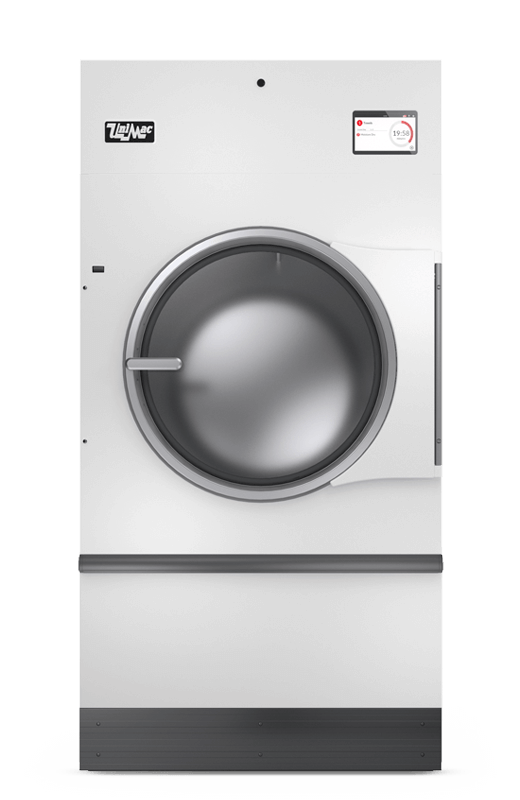
Industrial Tumble Dryer
Right-sized equipment for your OPL volume and space.
Laundry room design and utility requirements.
Professional installation with training and startup.
Staff training for proper equipment operation.
Preventative maintenance for equipment reliability.
Genuine parts and consumables for ongoing operations.
An On-Premise Laundry (OPL) is a laundry operation owned and run by the facility it serves — a hotel doing its own linens instead of contracting them out, a hospital doing its own surgical and patient linens, a fire department cleaning its own turnout gear. OPL is the alternative to outsourced commercial laundry service, and it's a choice that matters for cost, quality control, turnaround, and risk management.
Operations typically choose OPL over contracted laundry when:
Proper OPL sizing comes down to four numbers:
Multiply daily pounds × headroom factor, divide by cycle throughput per machine, and you have your machine count. We do this analysis as part of every OPL equipment quote to make sure you're not over- or under-buying.
If you're considering whether to bring laundry in-house or stay with contracted service, we can build a side-by-side cost analysis: equipment capital, financing, utilities (water, gas, electric, sewer), chemistry, labor, maintenance, and depreciation against your current contracted laundry spend. The break-even calculation is usually clear once the numbers are on paper, and we'll be honest about which makes more sense for your specific operation.
We design, install, and service OPL operations across hospitality, healthcare, fire departments, senior living, food service, athletic facilities, spas, and industrial uniform programs throughout NJ, eastern PA, NYC, and Delaware. Operations from single-machine fire stations to multi-machine industrial OPL rooms processing thousands of pounds per day.
Already running an on-premise laundry at a hotel, resort, or other hospitality property? Beyond design and installation, we keep existing rooms running with preventative maintenance for hotel laundry equipment, repair, and emergency service — servicing and supplying genuine parts for washer-extractors and dryers from all major commercial laundry brands, not just the machines we sell.
Common questions from facilities specifying an on-premise laundry with HM Commercial Laundry in New Jersey.
An on-premise laundry (OPL) is a laundry operation owned and run by the facility it serves — a hotel doing its own linens instead of contracting them out, a hospital doing its own surgical and patient linens, a fire department cleaning its own turnout gear. OPL is the alternative to outsourced commercial laundry service, and it is a choice that matters for cost, quality control, turnaround, and risk management.
The general rule: above ~500 lb/day of consistent processing, in-house is usually cheaper per pound than outsourced. Below that, contracted laundry is often more economical unless you have specific quality control, turnaround, or compliance reasons to stay in-house. We do a custom build-vs-outsource analysis as part of any OPL conversation.
A small OPL (250–500 lb/day) is typically a single 60-80 lb washer-extractor with a matching dryer, often a hardmount or compact softmount. Mid-size OPLs (500–1,500 lb/day) usually need two or three 80-130 lb washer-extractors with matching dryers, typically softmount for higher G extract and faster dry times. Large institutional OPLs (1,500–5,000+ lb/day) use a multi-machine fleet with 130-200 lb hardmount washer-extractors and high-throughput tumble dryer banks. Industrial OPLs processing 5,000+ lb/day use high-capacity batch washer-extractor fleets engineered for continuous operation.
It depends on capacity. A small OPL with a 60 lb washer and dryer needs roughly 200-300 sq ft including operator workspace. A mid-size OPL with three 130 lb machines needs 600-1,000 sq ft. Large institutional OPL rooms scale further, plus require utility infrastructure for water service, gas/steam, and proper drainage.
Cold and hot water service sized to peak fill demand, drain sized to peak discharge, gas or steam supply for heating (or electric on smaller machines), 208/240/480V three-phase power on larger machines, and proper exhaust ducting for dryers. We do utility sizing as part of pre-install site survey.
Both. Softmount washer-extractors are designed for upper-floor installs because their internal suspension absorbs vibration. Hardmounts work in basements and ground-floor installs with proper anchoring. Floor structural capacity, drain location, and utility availability are the constraints we evaluate during site survey.
From initial conversation to operational laundry typically runs 8-16 weeks: 1-2 weeks for site survey and equipment specification, 4-8 weeks for equipment manufacturing and delivery, and 1-3 weeks for installation, utility hookup, and operator training. Specialty configurations or large industrial installs can run longer.
Yes. If you are considering whether to bring laundry in-house or stay with contracted service, we can build a side-by-side cost analysis: equipment capital, financing, utilities (water, gas, electric, sewer), chemistry, labor, maintenance, and depreciation against your current contracted laundry spend. The break-even calculation is usually clear once the numbers are on paper, and we will be honest about which makes more sense for your specific operation. Call HM Commercial Laundry at (732) 681-0500 from 647 Herman Road #3, Jackson, NJ — we design, install, and service OPL rooms across hospitality, healthcare, fire departments, senior living, food service, athletic facilities, spas, and industrial uniform programs throughout NJ, eastern PA, NYC, and Delaware.